Theodor Herzl’s Utopian Vision and Tel Aviv
09/16/2021
Shaping the face of Tel Aviv
10/17/2021
Town planning regulations for Tel Aviv
Town planning regulations for Tel Aviv, were formulated in 1909 by Arthur Ruppin with the help of Oscar Marmorek (who was a close acquaintance of Theodor Herzl). Marmorek sent Ruppin books on urban planning by Ebenezer Howard, an English urban planner and father of the garden city movement as well as German architect and urban planner Josef Stübben. Stübben, an expert on modern planning methods had composed regulations for urban centers and systems, street and square dimensions, public buildings and more. These served as a foundation for the building standards formulated for Ahuzat Bayit. When Rupin composed his regulations, he envisioned the city of Heliopolis in Egypt. A review of the regulations reveal that they focus on two main objectives:
- Ensuring that private building would not deviate from the committee’s vision of a modern neighborhood and garden suburb.
- Preventing speculation of real estate which would cause a rise in the price of land in the area.
The regulations and the plan of the neighborhood reflect strict standards and mention the obligations of the residents themselves. Each lot was to be about half a dunam in size, houses would be surrounded with gardens at least 2 meters in width and would be marked out by a low fence; courtyards would be kept clean. Land would be allocated for a public park, roads would be wide and lined with sidewalks; water and sewage pipes would be installed in the houses. These regulations ensured that this garden suburb would offer a quality community life and standard of living.
These bylaws were approved in 1909. A year later, new regulations were added by Mordechai Ben Hillel HaCohen, a Zionist activist, author, and businessman. The final text of 57 regulations organized in nine chapters was published that year.

New Commercial Center
More town planning regulations for Tel Aviv
In addition to regulations governing the physical aspect of the neighborhood, these bylaws included rules restricting the opening of businesses in the neighborhood. The opening up of businesses in the neighborhood was forbidden and only allowed in rare cases. All commerce was conducted in nearby Jaffa. To that end a bus service of carriages would travel back and forth from Jaffa to Achuzat Bayit , In the beginning, the issue of commerce in the neighborhood was debated again and again. Some people felt that the restriction against commerce in the neighborhood was a restriction of their rights to use their property as they saw fit. However, the majority felt that having businesses in the neighborhood would bring noise and filth.
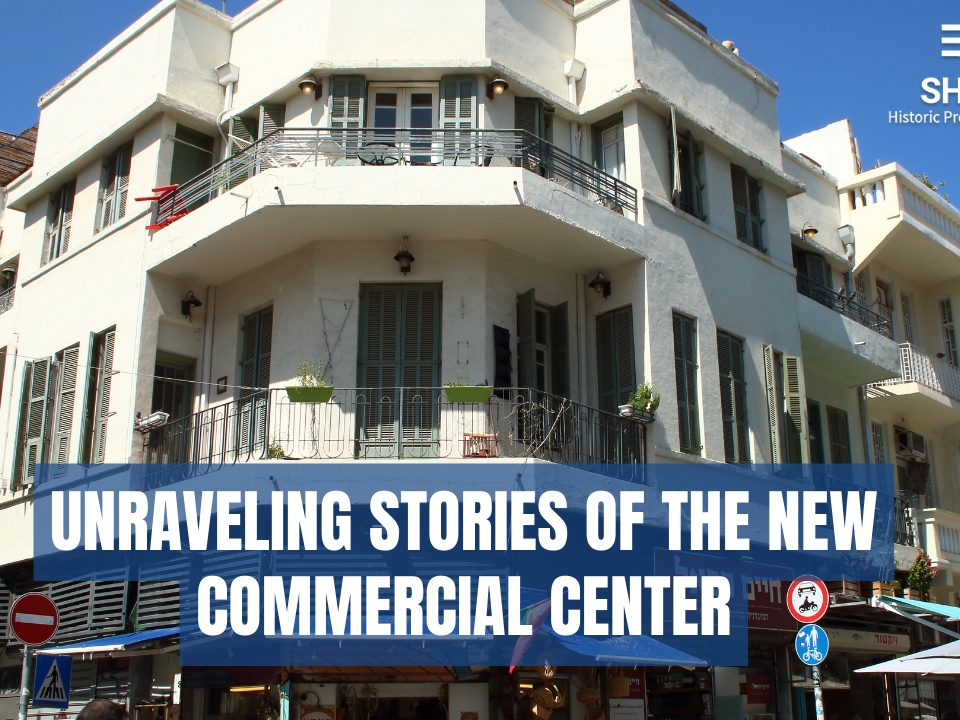
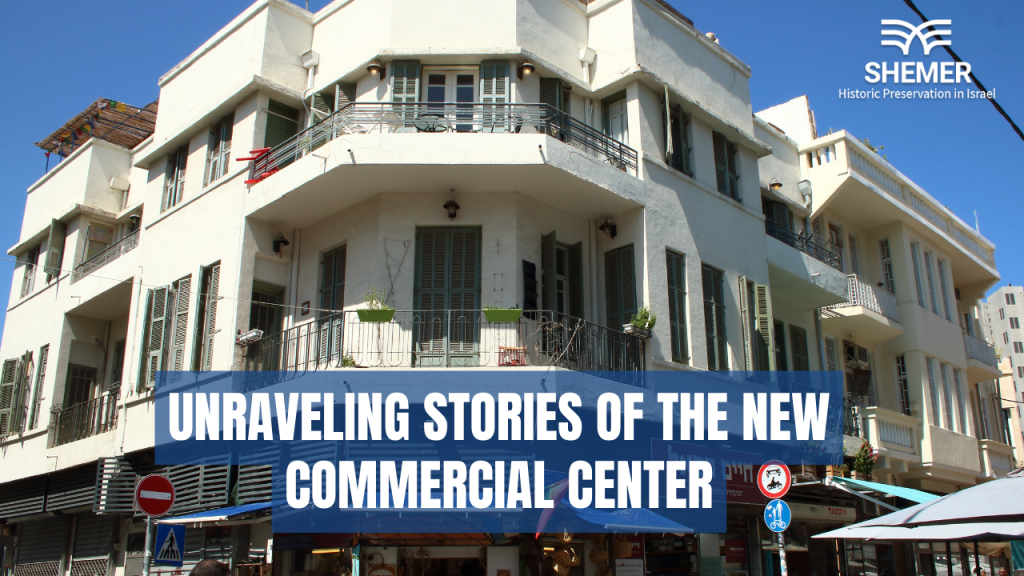
It wasn’t until 1921, after the Arab riots in May of that year the lands were purchased south of the railroad tracks and a new neighborhood called the “New Commercial Center” was established. This neighborhood housed stores, offices as well as residential apartments and it became the commercial center of Tel Aviv at that time.

Arab Riots 1921

New commercial center